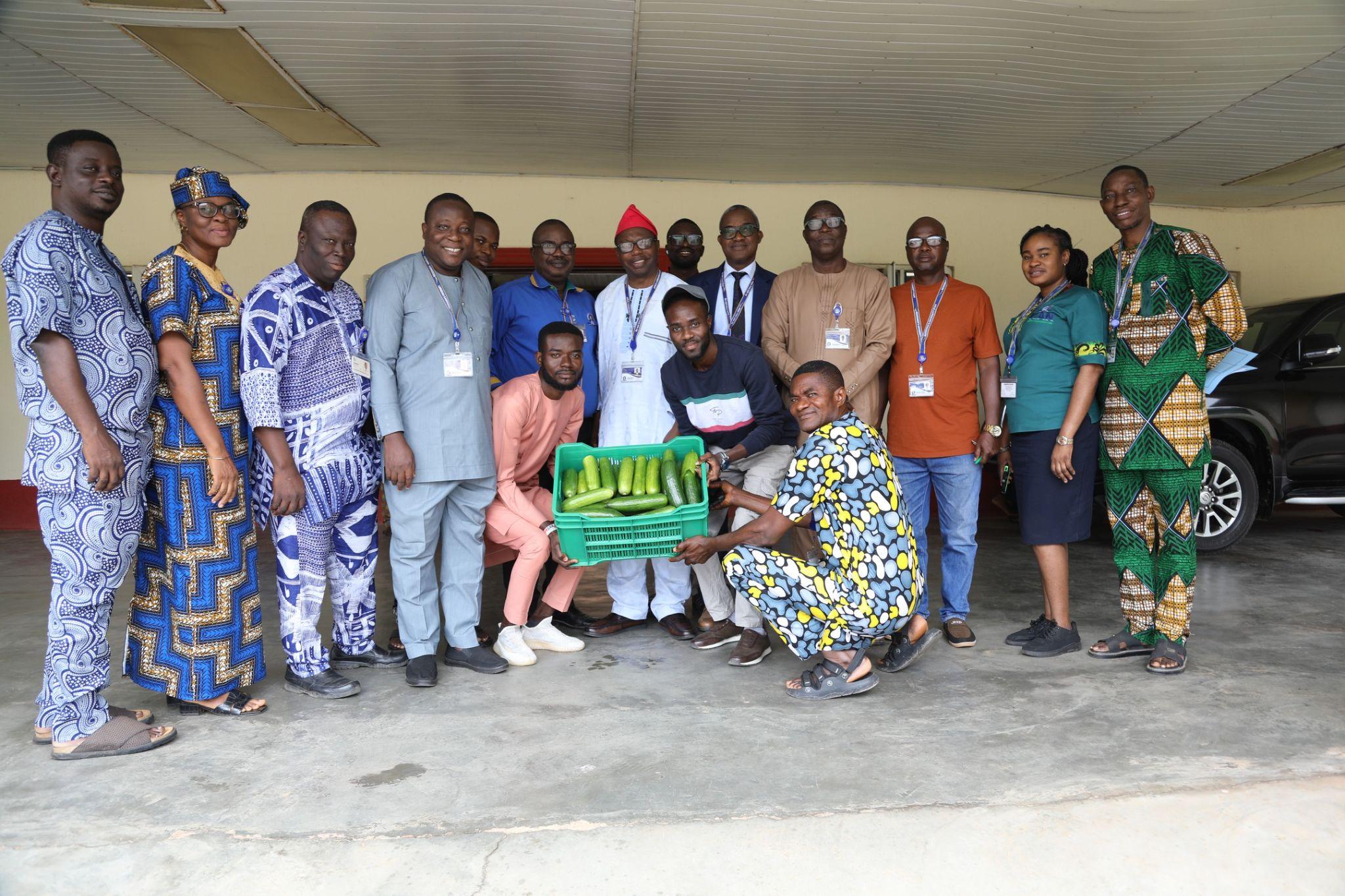
For Redeemer’s University, progress towards Zero Hunger reaches beyond campus dining. Its relationship with Ede and surrounding communities creates opportunities to share practical agricultural knowledge, bring people together around food production, and make university resources available to those who depend on farming for their livelihoods. The university’s greenhouse, community-oriented agricultural activities and support for local farmers provide a foundation for this work.
Sharing Food Security Knowledge and Sustainable Agricultural Skills
Redeemer’s University contributes to food security knowledge through agricultural research and practical work in its greenhouse. The greenhouse employs people from the neighbouring Ede community, while managers and supervisors provide guidance on crop production, management of growing conditions and handling harvested produce. This hands-on experience helps participants develop skills relevant to agricultural productivity and sustainable food production.
The university’s research adds an evidence-based dimension to this work. Research on antimicrobial use in smallholder poultry production in Nigeria, for example, draws attention to the importance of responsible medicine use, livestock health and safer production practices. Findings of this kind can inform practical learning about agricultural sustainability and food security among farmers and producers.
By connecting agricultural expertise with the realities faced by local producers, the university provides a basis for sharing knowledge on how to improve crop and livestock production, strengthen food availability and protect the sustainability of local food systems.
Connecting Local Farmers through Agricultural Events and Demonstrations
Agricultural events create opportunities for local producers to see new approaches in practice, exchange experience and build links with others working in food production. Redeemer’s University has highlighted its greenhouse initiative and the Redeemer’s University Women’s Association (RUNWA) wealth-creation activities as opportunities for practical engagement with agriculture in and around its host community.
The university greenhouse launch introduced greenhouse cultivation as an approach to growing crops in managed conditions. It provided a setting for discussion and demonstration of the potential benefits of greenhouse production, including crop management and the challenges posed by pests and variable growing conditions. RUNWA’s wealth-creation activities have also encouraged practical household-scale agriculture, including container gardening, growing vegetables in limited spaces and making productive use of available land.
These events and initiatives illustrate how Redeemer’s University can bring agricultural learning closer to the people who cultivate food and support community-level food security. They complement the university’s ongoing relationship with farmers in Ede and provide a foundation for continued knowledge exchange.
Making University Farmland and Agricultural Resources Accessible
Redeemer’s University makes portions of its unused land available to farmers from the Ede community for cultivation and harvesting at no cost. Interested local farmers and food producers submit a formal request to the university. This arrangement gives community members access to productive farmland without the burden of purchasing or leasing additional land.
The university also makes greenhouse produce available to farmers and food producers beyond the campus. Local producers may purchase the produce at subsidised prices, extending the benefits of the agricultural operation beyond students and staff. When land previously made available for cultivation is needed again by the university while crops are still growing, affected farmers are compensated for those crops.
In addition to providing land and access to produce, the university’s greenhouse demonstrates practical methods of cultivation and crop management. Together, these arrangements support local food production, reduce barriers to access and strengthen the relationship between the university and its host community. Through agricultural knowledge, opportunities for community learning and practical access to resources, Redeemer’s University supports local farmers and food producers as part of its wider commitment to SDG 2: Zero Hunger.